These offers are no longer available on our site: Ink Business Cash® Credit Card, Capital One Spark Classic for Business
Hear from our editors: The best business credit cards of September 2026
Updated August 31, 2026
This date may not reflect recent changes in individual terms.
Editorial Note: Intuit Credit Karma receives compensation from third-party advertisers, but that doesn’t affect our editors’ opinions. Our third-party advertisers don’t review, approve or endorse our editorial content. Information about financial products not offered on Credit Karma is collected independently. Our content is accurate to the best of our knowledge when posted.
Written by: Tim Devaney
Edited by: Eric Freeman, Editorial Lead, Credit Cards
The best business credit cards offer a mix of features that include cash back, travel rewards, low intro APRs and the opportunity to build credit. Here are the best business credit cards of 2026.
- Ink Business Preferred® Credit Card: Best for business trips
- Capital One Spark Cash Select: Best for offsetting business expenses
- Ink Business Cash® Credit Card: Best for staying on budget
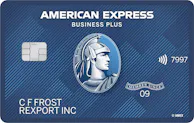
- The Blue Business® Plus Credit Card from American Express: Best for low interest
- Capital One Spark Classic for Business: Best for building business credit
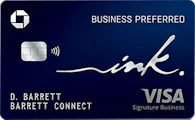
Ink Business Preferred® Credit Card: Best for business trips
Here’s why: The Ink Business Preferred® Credit Card could help your company pay for business travel purchases.
You’ll earn 100,000 bonus points after spending $8,000 on qualifying purchases during the first 3 months your account is open. You’ll likely be able to get the best value for your points if you redeem them through one of Chase’s transfer partners.
It’s also worth noting — if work takes you overseas — foreign transaction fees are $0 with this card. But there is a $95 annual fee.
Check out our review of the Ink Business Preferred® Credit Card to learn more.
Capital One Spark Cash Select: Best for offsetting business expenses
Here’s why: If you want rewards for your company’s spending and don’t want to track a complicated rewards program, this card offers straightforward rewards with no annual fee.
It provides 1.5% cash back on every purchase with no category limits (plus 5% cash back on hotels and rental cars booked through Capital One Business Travel). Capital One Spark Cash Select also comes with free employee cards and the ability to create preset spending limits for each.
For more details, take a look at member reviews of the card.
Ink Business Cash® Credit Card: Best for staying on budget
Here’s why: If you’re looking for a business card but don’t want to break the bank, look no further than the Ink Business Cash® Credit Card.
The Ink Business Cash® Credit Card comes with a $0 annual fee. So you don’t have to shell out money each year just to hold the card.
But it’s more rewarding than many other no-annual-fee credit cards. You’ll earn $1,000 bonus cash back after your company spends $8,000 on purchases during the first 4 months after account opening.
Beyond the sign-up bonus, you’ll score 5% cash back (up to $1,250) on the first $25,000 your company spends each account anniversary year in combined purchases of internet, cable and phone services and at office supply stores. After that, you’ll get 1% cash back.
You’ll also earn 2% cash back (up to $500) on the first $25,000 your company spends each account anniversary year in combined purchases at restaurants and gas stations. After that, you’ll get 1% cash back.
You’ll also earn 1% cash back on all other purchases.
Check out our review of the Ink Business Cash® Credit Card.
The Blue Business® Plus Credit Card from American Express: Best for low interest
Here’s why: The low intro purchase APR on The Blue Business® Plus Credit Card from American Express could help you save money on interest charges while financing your business.
It features an introductory 0% APR on purchases for the first 12 months from account opening.
After that, you’ll pay a variable rate of 16.74% - 28.49% on purchases.
Plus, you’ll get two Membership Rewards® points for every $1 you spend on eligible purchases on up to $50,000 every calendar year (then one point per $1).
With a $0 annual fee, this card has a lot to offer. Learn more in our review of The Blue Business® Plus Credit Card from American Express.
Capital One Spark Classic for Business: Best for building business credit
Here’s why: The Capital One Spark Classic for Business can help you earn cash back while building credit for your business.
If you’re applying for your first business card and you don’t have strong credit (business or personal), you might have a difficult time qualifying for some of the best small-business credit cards on this list.
But the Capital One Spark Classic for Business could help you get there, if you make your payments on time and keep your credit utilization rate low.
There’s a $0 annual fee on this card, you’ll earn 1% cash back on all eligible purchases and 5% back on hotels and rental cars booked through Capital One Travel.
Check out our review of the Capital One Spark Classic for Business.
How we picked the best business credit cards
To find the best business cards, we started with the assumption that there isn’t one single best business card. Each company has different needs.
We thought about what different businesses might benefit from — including business travel rewards, cash back, low intro APRs and the opportunity to build business credit — and researched the cards in each of those categories.
How do I qualify for a business credit card?
You might be surprised to learn that you could qualify for a business card.
Many people could qualify for business cards without realizing it because they don’t see themselves as small-business owners. But you don’t have to own a restaurant or a car dealership to have a business.
Many business credit cards allow independent contractors like rideshare drivers, online sellers and freelancers to apply. Here’s how to get a business credit card.
If you do qualify for a business credit card, keep in mind that you should use the card only for business expenses. Business credit card issuers typically frown on cardholders using these cards to make purchases that should be left to their personal credit cards.