Intuit Credit Karma Free Credit Score & Free Credit Reports With Monitoring 2026-02-27T22:21:44Z https://www.creditkarma.com/feed/atom WordPress Brad Hanson <![CDATA[How to file taxes for free]]> https://www.creditkarma.com/?p=9142916 2026-02-26T20:30:42Z 2026-02-13T22:16:45Z Woman working from home while her dog sits on the desk.

Key takeaway: Free tax filing options are available through IRS Free File, government-sponsored community assistance programs and free editions from major tax brands — but not everyone is eligible. You may be able to file your federal and state taxes for free, depending on your income, age, military status and the tax forms you’re required to use.

There are ways to file taxes for free — including IRS programs, community programs and tax software with free versions — but the best choice (and eligibility) depends on your situation and how complex your return is. 

You’re more likely to find free tax filing options if your taxes are straightforward or if you qualify based on factors like income, age or disability status. But even if you’re eligible for multiple options, one may stand out from the others based on what you’re looking for, such as live expert support, how easy it is to use, and whether you need to file state taxes in addition to federal.


Where can I file taxes for free?

If you meet their criteria, you can file your return for free with IRS Free File, Volunteer Income Tax Assistance (VITA), Tax Counseling for the Elderly (TCE) or MilTax, as well free versions of commercial software such as TurboTax Free Edition. Keep in mind that some “no-cost” filing options may still charge extra for state returns. 

When deciding where is best to file your taxes, take a look at how each one works and who typically qualifies.

Free-file providers offer guided preparation for federal returns, though eligibility often depends on your income, age or the complexity of your tax forms.

IRS Free File

Pros

  • Free access to some tax prep software to e-file a federal return
  • Multiple participating providers to compare

Cons

  • Eligibility depends on income and other provider-specific requirements
  • State returns may not be included and can cost extra

What it is: IRS Free File is a public-private partnership between the IRS and the Free File Alliance, a group of industry-leading tax prep software companies. 

This program provides eligible taxpayers with free access to brand-name tax prep software to prepare and e-file their federal returns at no cost. 

The Free File Alliance estimates that about 70% of taxpayers — about 100 million people — qualify for the free IRS e-file.

Who is eligible: If your adjusted gross income is $89,000 or less in 2025, you may be eligible to use Free File for 2026. 

How to file for free: To get started, browse the current offers on the IRS website from participating providers and review each provider’s terms to confirm you qualify for a free federal return. 

Some partners also include free state filing, while others may charge for state returns. Once you select an offer, you’ll leave IRS.gov and complete your tax return on the provider’s site.

Heads up: Note that if you don’t qualify for guided IRS Free File, the IRS also offers Free File fillable forms, which are available at any income level. This option may be a good option for you if you’re comfortable preparing your own tax return without step-by-step guidance.

Volunteer Income Tax Assistance and Tax Counseling for the Elderly

Pros

  • Free, IRS-certified volunteer help with basic tax returns
  • TCE is especially helpful for retirement and pension questions, with a focus on adults ages 60+

Cons

  • Limited to basic returns and eligibility requirements may apply
  • Availability varies by location, hours and languages

What it is: The IRS offers two programs — Volunteer Income Tax Assistance (VITA) and Tax Counseling for the Elderly (TCE) — that provide free help with basic tax returns for people who qualify.

Who is eligible:

  • VITA: You may qualify if you earn $69,000 or less, have a disability or speak limited English.
  • TCE: Specializes in pension and retirement-related questions. It offers free tax assistance for all taxpayers, with a focus on helping people age 60 and older.

How to file for free: The IRS website lets you search for VITA sites nationwide and shows details like hours of operation, languages offered and whether you need to schedule an appointment. Trained volunteers can explain common tax issues and prepare basic tax returns for free.

Heads up: Although the IRS oversees both programs, local VITA and TCE sites are operated by community partners and staffed by IRS-certified volunteers.

MilTax for military members and veterans

Pros

  • Free tax software plus support from trained consultants (phone or live chat)
  • No income limits
  • Includes one federal return and up to five state returns at no cost
  • Built for common military tax situations including deployments, combat pay and multistate filing

Cons

  • Limited to eligible service members, families, survivors and qualifying veterans
  • Program offers no in-person assistance

What it is: Offered by the Department of Defense, MilTax is a free military-focused tax filing program that includes tax preparation and e-filing software, plus access to trained consultants who can answer questions by phone or live chat. 

Who is eligible: MilTax is available to service members, qualifying veterans and family members. And there are no income limits.

How to file for free: To get started, visit MilitaryOneSource.mil to access the software, review eligibility and find support options. Eligible taxpayers can file one federal return and up to five state returns at no cost. The software is designed for common military tax situations such as deployments, combat pay, frequent moves and multistate filing.

Free editions of tax prep software

Pros

  • Convenient guided filing for simple returns
  • Multiple well-known providers offer free tiers
  • Good fit for straightforward returns (e.g., W-2 income and standard deduction)

Cons

  • “Simple” return rules vary by provider
  • State returns may cost extra
  • More complex situations including 1099 income, stock sales or rental property income may require paid upgrades
  • Expert help typically costs extra

What it is: Many major tax software companies offer a free version for tax filers with simple returns. Several major providers — including Credit Karma powered by TurboTax — offer free tiers, so it’s worth comparing what’s included.

Who is eligible: What counts as a “simple return” varies by company, but you’ll often qualify if you only have items such as W-2 income, interest and dividend income, and take the standard deduction. More complicated tax situations — such as multiple income sources or itemized deductions — typically aren’t eligible for the free option.

How to file for free: Choose a provider’s free tier and make sure you’re using its specific “free edition,” which may differ from the same company’s IRS Free File offer. Next, review how the provider defines a “simple return” so you don’t get bumped into a paid upgrade. If you have a straightforward return, you might also file at no cost using TurboTax Free Edition in the Credit Karma app.

Heads up: Before you submit — no matter which free edition you use — confirm the price summary shows $0 and whether state filing is included.


What documents do I need to file my taxes for free?

There are common tax documents you’ll need to file your taxes, but what you’ll use depends on your specific tax situation and the free filing option you choose.

Personal information

  • Your Social Security number or Tax ID number 
  • Social Security number for spouse and any dependents
  • Bank account and routing numbers for direct deposit/refund

Income docs

  • W-2 forms from each employer 
  • Form 1099-G (unemployed) 
  • Interest (1099-INT) and dividends (1099-DIVS) that don’t require filing a Schedule B
  • Form 1099-K (payments from payment cards and online marketplaces)
  • Form 1099-R (IRA and pension distributions)

Deductions and credits

  • Schedule 1-A (Form 1040; deduction for tip income, overtime pay, interest paid on car loans and enhanced deduction for seniors)
  • 1098-E (student loan interest) 
  • 1098-T (tuition)
  • Form 8863 (educational credits)
  • Property and vehicle tax receipts
  • Receipts for cash donations (charitable giving)
  • Records for non-cash donations (goods, clothing, etc.)

What documents do I need to file taxes online for free on Credit Karma?

If your tax situation is simple and straightforward, you may be able to file for free using TurboTax Free Edition in the Credit Karma app. In general, a “simple” return is a basic Form 1040 that doesn’t require complex schedules, which are add-on forms used to report specific types of income, deductions or credits.

You’ll usually qualify for the free version if your tax documents include only:

  • W-2 income: Wages from an employer
  • Limited interest or dividends: Forms like 1099-INT or 1099-DIV that don’t require Schedule B
  • Standard deduction: You’re not itemizing deductions such as mortgage interest or medical expenses
  • Common tax credits: Earned Income Tax Credit (EITC) or Child Tax Credit (CTC)
  • Student loan interest: Interest reported for the student loan interest deduction
  • Basic retirement income: Distributions from a qualified retirement plan

Pro tip: If you didn’t file with TurboTax last year, you can file for free on the Credit Karma or TurboTax mobile app even if your taxes are more complex and include such things as investment or freelance income. Just be sure to start in either the TurboTax or Credit Karma mobile app and finish in the app or web browser by 11:59 p.m. ET Feb. 28, 2026, to take advantage of this offer. Offer terms apply.


Which free filing option is right for me?

The best free filing choice depends on your income, the tax forms you need, any life circumstances that affect your return (such as retirement income or military service) and how much help you want along the way.

  • Determine your adjusted gross income for tax year 2025.
  • Size up the complexity of your return. If you only have W-2 income and take the standard deduction, it’s likely pretty straightforward.
  • Consider any special circumstances, such as retirement or pension questions, or being a member of the military, a qualifying veteran or a family member.
  • Decide whether you’d like in-person help or prefer to file on your own.

With these considerations in mind, you’re ready to choose the filing route that fits your needs and comfort level — whether that’s IRS Free File, VITA, TCE, MilTax or a commercial free edition for a simple return.

Review you options carefully so you’re not surprised by charges for state filing or optional add-ons.

When you’re ready, e-filing with direct deposit is usually the fastest way to get your refund. The IRS says most refunds arrive within 21 days after your return is accepted, though timing can vary.

When should I consider paying to file taxes?

Consider paying to file your taxes when a paid version saves you time, reduces stress or helps you file more accurately — especially if your return includes forms that free tiers don’t cover. That can include paying for state filing when it isn’t free or upgrading for more complex situations like freelance income, stock sales or rental property. You may also decide it’s worth the cost if you want live expert support or a review for peace of mind. Before you submit, check the final price summary so you understand exactly what you’re paying for, including any state fees or add-ons.

Relevant sources: Free File Alliance, IRS: E-file: Do your taxes for free / IRS: Free tax return preparation for qualifying taxpayers / IRS: Free File software – Most commonly filed federal forms are available / USA.gov: How to file your federal income tax return / Military OneSource: Miltax: Free Tax Services / IRS: Form 1099-K / IRS: Form 1099-G / IRS: Form 1099-INT / IRS: Form 1099-DIV / Publication 4491, VITA/TCE Training Guide / USA.gov: Get free help with your tax return / IRS: IRS Free File can handle many complicated tax returns / IRS: Instructions for Schedule A (Form 1040)


FAQs about how to file taxes for free

If your tax situation is simple, you may be able to file for free using TurboTax Free Edition in the Credit Karma app, which generally covers basic Form 1040 returns with W-2 income, the standard deduction and common credits like the Child Tax Credit and Earned Income Tax Credit. You can get started at Credit Karma powered by TurboTax.

Yes, but it depends on the program or provider you use and your tax situation. With IRS Free File, some participating providers include free state filing, while others charge for state returns. So check the offer details before you submit.

IRS Free File only supports filing your current-year tax return, not prior years. For past returns, you may be able to get free help at Volunteer Income Tax Assistance (VITA) or Tax Counseling for the Elderly (TCE) sites — often for the previous three years.

The best way to file taxes for free is to start with the option you’re most likely to qualify for, such as IRS Free File, VITA/TCE, MilTax or a commercial free edition for simple returns, like Credit Karma powered by TurboTax. Before you begin, check what “free” includes — especially whether state filing and the forms you need are covered.



About the author: Brad Hanson is a senior editor at Intuit Credit Karma specializing in tax. He joined Credit Karma in 2017. Brad has more than 30 years of experience in print and digital media, having served as a copy chief/multiplatf… Read more.
]]>
Casey Hollis <![CDATA[The best balance transfer cards of 2026]]> https://www.creditkarma.com/?p=50336 2026-02-27T22:21:44Z 2026-02-13T01:18:27Z Vector drawing of a hand pointing at a credit card

Hear from our editors: The best balance transfer cards of March 2026

Updated February 27, 2026

This date may not reflect recent changes in individual terms.

Editorial Note: Intuit Credit Karma receives compensation from third-party advertisers, but that doesn’t affect our editors’ opinions. Our third-party advertisers don’t review, approve or endorse our editorial content. Information about financial products not offered on Credit Karma is collected independently. Our content is accurate to the best of our knowledge when posted.

Louis DeNicola is a personal finance writer and has written for American Express and Discover.

Written by: Louis DeNicola

Edited by: Claire Diver, Senior Editor, Credit Cards

Do you carry a balance on your credit cards? If you do, how much interest are you paying?

Rather than pay interest on your credit card debt or juggle multiple payments each month, you may be able to transfer high-interest debt to a single credit card by doing a balance transfer.

Here are our choices for the best balance transfer cards.


Best for long 0% intro APR: Wells Fargo Reflect® Card

Here’s why: This card offers one of the longest 0% intro APR periods you’ll see for a balance transfer card.

The Wells Fargo Reflect® Card features a 0% introductory APR for 21 months on both purchases and balance transfers made within 120 days of account opening. After that, the purchase and balance transfer APRs rise to a variable 17.49%, 23.99%, 28.24%. There’s also a balance transfer fee of 5% (minimum $5).

Average score and credit limit for people with the Wells Fargo Reflect® Card or similar cards

Intuit Credit Karma members who were approved for the Wells Fargo Reflect® Card or similar cards, or who self-matched with this card or similar cards, have the following average credit score and credit limit:

  • Average credit score: 702
  • Average credit limit: $8,727

Average credit score and credit limit as of Feb. 9, 2026.

Learn more about the Wells Fargo Reflect® Card.

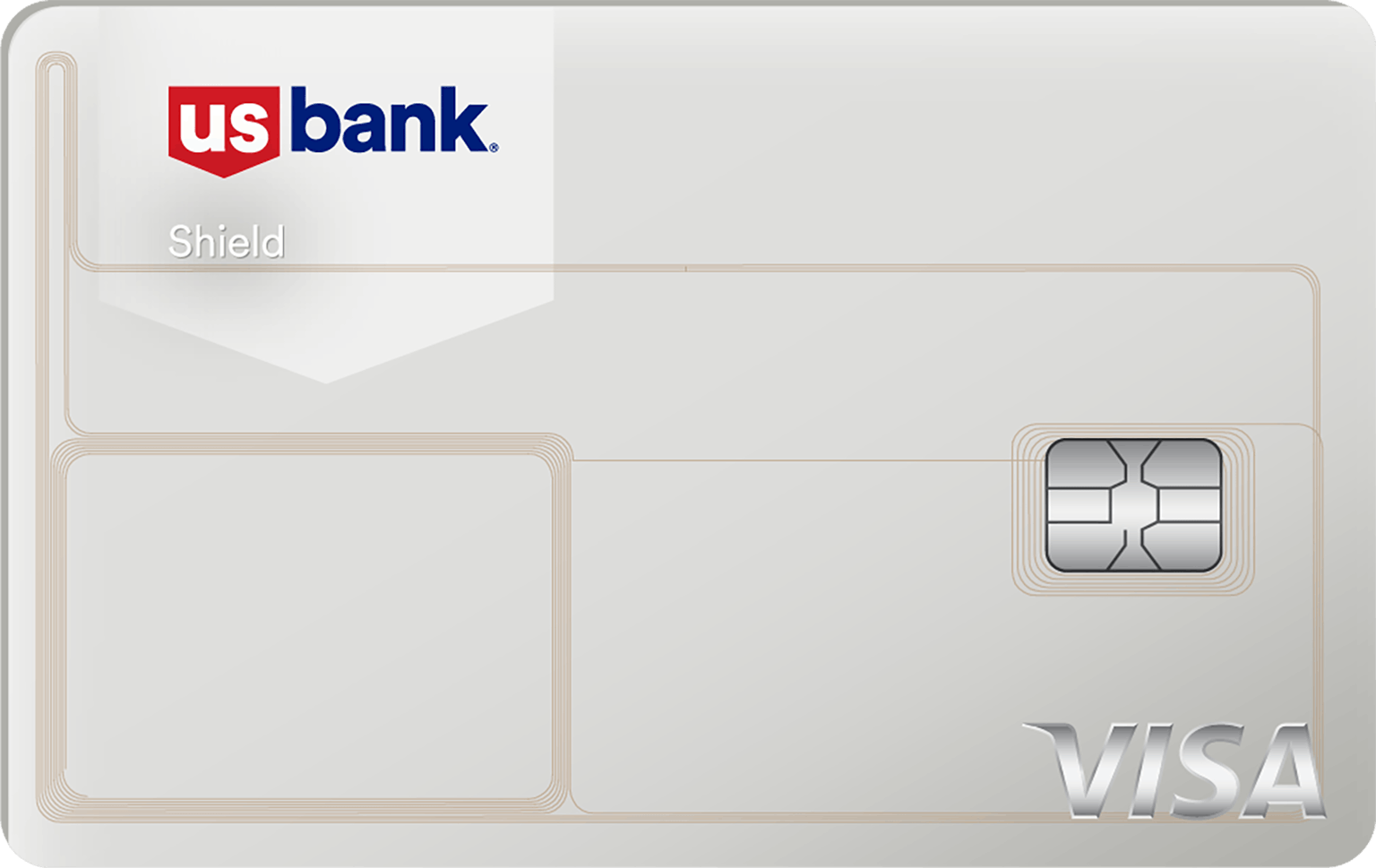
Best for long 0% intro APR: U.S. Bank Shield™ Visa® Card

Here’s why: This card has one of the longest 0% intro APR periods available.

The U.S. Bank Shield™ Visa® Card has a 0% intro APR on purchases and balance transfers for 18 billing cycles after account opening. To qualify for the intro rate, you must transfer your balance within 60 days of account opening. There’s a balance transfer fee: An introductory fee of either 3% of the amount of each transfer or $5 minimum, whichever is greater, for balances within 60 days of account opening. After that, either 5% of the amount of each transfer or $5 minimum, whichever is greater. After the intro period is over, the regular variable APR for purchases and balance transfers rises to 16.99% - 27.99%.

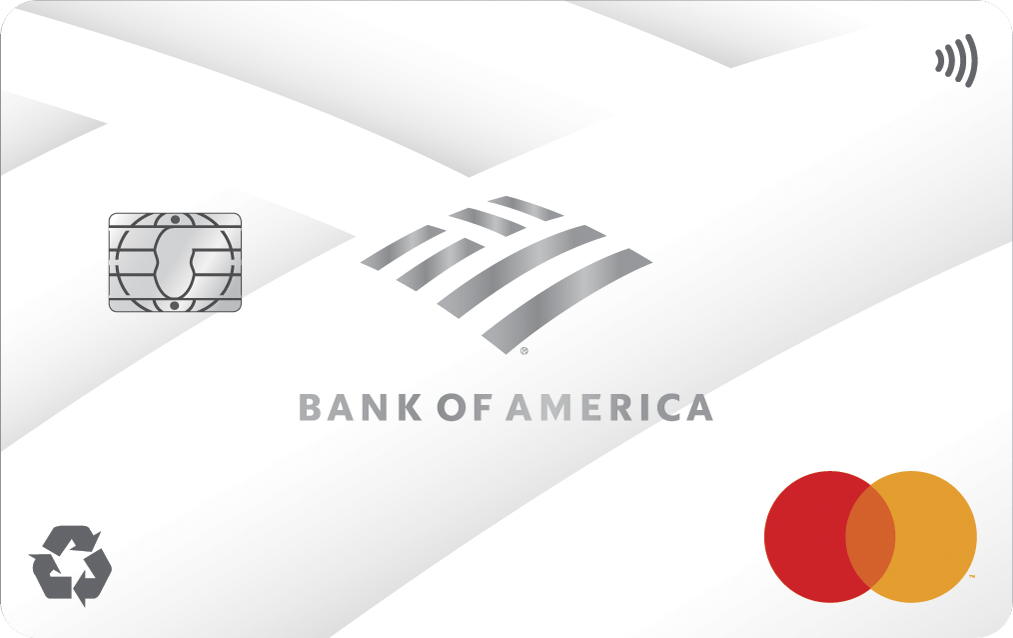
Best for a long 0% intro APR: BankAmericard® credit card

Here’s why: This card offers a long 0% intro APR period, plus a relatively lower balance transfer fee.

The BankAmericard® credit card offers a 0% introductory APR for 21 billing cycles on purchases and balance transfers made within the first 60 days of opening your account. After the end of that period, both variable APRs rise to 14.99% - 25.99%. There’s also a balance transfer fee of 5% of the amount of each transaction.

Average score and credit limit for people with the BankAmericard® credit card or similar cards

Intuit Credit Karma members who were approved for the BankAmericard® credit card or similar cards, or who self-matched with this card or similar cards, have the following average credit score and credit limit:

  • Average credit score: 718
  • Average credit limit: $10.342

Average credit score and credit limit as of Feb. 9, 2026.

Read more about the BankAmericard® credit card.

Best for people who might forget to pay back in time: Citi Simplicity® Card

Here’s why: The Citi Simplicity® Card combines low intro APR offers with no late fees or penalty APR if you pay late.

While it’s a good idea to pay on time, this can be a helpful safety net for busy people who are prone to forget their due dates from time to time. Keep in mind that even though this card doesn’t have late fees or a penalty APR, you may still have a late payment reported on your credit if you’re 30 days or more late on your payments.

You’ll also get an intro 0% APR on balance transfers for 21 months, plus an intro 0% APR for purchases for the first 12 months from date of account opening (you may see different offers on Credit Karma). There are a few things to know before you apply for this card, though.

  • Once those two introductory windows are up, you’ll be charged a variable APR of 17.49% - 28.24% on both purchases and balance transfers.
  • To qualify for the low balance transfer rate, you must complete your transfers within four months of your account opening.
  • You’ll be charged to transfer a balance. The Citi Simplicity® Card has a balance transfer fee: Intro fee 3% of each transfer ($5 minimum) completed within the first 4 months of account opening. After that, 5% of each transfer ($5 minimum).

Average score and credit limit for people with the Citi Simplicity® Card or similar cards

Intuit Credit Karma members who were approved for the Citi Simplicity® Card or similar cards, or who self-matched with this card or similar cards, have the following average credit score and credit limit:

  • Average credit score: 705
  • Average credit limit: $8,547

Average credit score and credit limit as of Feb. 9, 2026.

Learn more about the Citi Simplicity® Card.

Best for time to transfer your balances: Citi® Diamond Preferred® Card

Here’s why: The no-frills Citi® Diamond Preferred® Card gives you more time to get all the paperwork in order for your balance transfers.

The Citi® Diamond Preferred® Card comes with a 0% intro APR on balance transfers for 21 months from date of account opening for balance transfers completed within the first four months of your account opening.

At the same time, you’ll receive a 0% intro APR on purchases for the first 12 months from date of account opening. After the intro APRs expire, you’ll be charged variable rates from 16.49% - 27.24% (note that your purchase APR and balance transfer APR may be different).

Keep in mind that there’s a balance transfer fee of 5% (minimum $5) per transfer.

Average score and credit limit for people with the Citi® Diamond Preferred® Card or similar cards

Intuit Credit Karma members who were approved for the Citi® Diamond Preferred® Card or similar cards, or who self-matched with this card or similar cards, have the following average credit score and credit limit:

  • Average credit score: 705
  • Average credit limit: $9,003

Average credit score and credit limit as of Feb. 9, 2026.

Learn more about the Citi® Diamond Preferred® Card.

Best for simple cash back: Citi Double Cash® Card

Here’s why: The Citi Double Cash® Card has a good 2% cash back rate for when you want to start using the card for purchases: 1% cash back on every purchase, and another 1% cash back when you pay the bill for those purchases.

It also has an introductory 0% APR for 18 months from the date of the first transfer for balance transfers that are completed within four months of your account opening. But there’s a balance transfer fee: Intro fee 3% of each transfer ($5 minimum) completed within the first 4 months of account opening. After that, 5% of each transfer ($5 minimum). And once the intro 0% APR window is up, there’s a variable APR of 17.49% - 27.49% on balance transfers.

Also, there’s no promotional rate for purchases, and your purchase balance may start to accrue interest right away if you’re still paying off balance transfers (the card’s variable APR for purchases is 17.49% - 27.49%). We generally recommend not using the card for new purchases until you pay off your balance transfers.

Average score and credit limit for people with the Citi Double Cash® Card or similar cards

Intuit Credit Karma members who were approved for the Citi Double Cash® Card or similar cards, or who self-matched with this card or similar cards, have the following average credit score and credit limit:

  • Average credit score: 694
  • Average credit limit: $8,336

Average credit score and credit limit as of Feb. 9, 2026.

Learn more about the Citi Double Cash® Card.


How to make the most of balance transfer cards

As with rewards cards and low-interest cards, it’s a good idea to compare balance transfer cards to determine which is best for your particular circumstances. If you don’t think you can pay off the debt quickly, a longer promotional period could be best. Or, you may want to try to save as much money as possible by avoiding balance transfer fees.

The right balance transfer card could help you save money while you pay down your debt, but even then it’s not a magic solution. Here are a few things you’ll want to watch out for, plus some tips for getting the most out of your card.

  • Some balance transfer cards give you an introductory 0% interest rate on purchases, too, but this may not be the same length as the balance transfer intro period.
  • You usually have to pay a fee to transfer your balance to your new card — typically 3% or 5% of your balance.
  • Balance transfer cards may provide temporary relief from high interest rates, but they don’t make your debt disappear. If you’re approved for a transfer, you should make a plan for paying your debt down during the introductory APR period.
  • A balance transfer calculator can help you estimate how much a particular balance transfer offer could save you.
  • Depending on how much debt you’re carrying, you may not be able to transfer all of your debt, even if you’re approved for the card. How much you can transfer will probably be restricted to the credit limit you’re approved for. The card’s issuer may set a maximum transfer amount, too.
  • You may need to have good or even excellent credit scores to qualify for a balance transfer card. If you’re still working on your overall credit, a card that can help you build credit may be a better fit for you.

As long as you’re aware of the potential pitfalls and have a plan, a balance transfer card could be a good option for you to help you consolidate and pay down debt.

How we picked these cards

We looked for cards that could help people who are currently in debt and plan to use a new balance transfer card to help them consolidate and pay down their debt. The length of the balance transfer introductory APR period and the balance transfer fee are two essential components, as a longer intro period and lower fees could help you pay off the balance before it starts to accrue interest.

We also considered other card fees, like annual fees, as these expenses could make it more difficult to pay off your debt. In fact, none of our picks for the best balance transfer cards charge an annual fee.

We didn’t consider sign-up bonuses, which can be more common with rewards cards than balance transfer cards.


About the author: Louis DeNicola is a personal finance writer and has written for American Express, Discover and Nova Credit. In addition to being a contributing writer at Credit Karma, you can find his work on Business Insider, Cheapi… Read more.
]]>
cmcarthur.cont@creditkarma.com <![CDATA[How to start maximizing the value of your Capital One Quicksilver Cash Rewards Credit Card right now]]> https://www.creditkarma.com/?p=9096802 2026-02-10T00:27:10Z 2026-02-10T00:27:09Z Three multi-ethnic young women shopping online while sitting on the sofa in the living room.

The Capital One Quicksilver Cash Rewards Credit Card offers great value, but you’ll need a plan to reap all the benefits.

With a $0 annual fee, you can start earning extra value for your spending right away. But it still pays off to know all the card’s features, even with no annual fee to earn back.


1. Earn the sign-up bonus

The best way to maximize the value of the Capital One Quicksilver Cash Rewards Credit Card is by qualifying for the sign-up bonus.

The current offer is a $200 bonus when you spend $500 on purchases within 3 months of the date your account opens, but your offer might have been different depending on when you applied.

2. Decide how to divide your spending

The Capital One Quicksilver Cash Rewards Credit Card offers a straightforward 1.5% cash back on all eligible purchases (plus 5% cash back on Capital One Entertainment purchases and on hotels, vacation rentals and rental cars booked through Capital One Travel).

It’s possible that you’ve already decided to simplify your spending and use this card for all purchases. But if you have other rewards cards, it’s worth considering when to use the Capital One Quicksilver Cash Rewards Credit Card and when to use another card that earns a higher rate in certain categories.

For instance, if you have another card that earns 3% back on dining purchases, it’s likely not worth using the Capital One Quicksilver Cash Rewards Credit Card in those situations.

3. Choose how to redeem your rewards

You’ll earn cash back from the Capital One Quicksilver Cash Rewards Credit Card, but you have several options on how to receive those rewards.

Capital One can issue your cash back as either a statement credit to your account or as a check. You can also choose to receive your rewards automatically, either at a set time each calendar year or when your balance has reached a certain threshold.

Capital One offers other options for redeeming rewards, including gift cards and toward PayPal or Amazon.com purchases, but these options might provide less value than you’d get from cash back.

4. Consider the 0% intro offer for big purchases

If you’re planning to make a big purchase and need time to pay it off, the Capital One Quicksilver Cash Rewards Credit Card could help you save money on potential interest charges.

The card offers a 0% intro APR on purchases and balance transfers for the first 15 months after your account opens. After the intro period ends, you’ll pay a variable APR for both purchases and balance transfers of 18.49% - 28.49%

You’ll also pay a balance transfer fee of 3% for the first 15 months; 4% at a promotional APR that Capital One may offer you at any other time.

While the balance transfer offer could be helpful if you’re carrying debt on other cards, we recommend that cardholders looking to maximize rewards stick to the 0% intro APR offer for new purchases. 

In general, it’s a good idea to avoid using the same card for both new purchases and managing existing debt. Juggling both balances can get complicated, and you could end up in more debt than when you started.


Next steps

Your Capital One Quicksilver Cash Rewards Credit Card comes with other benefits, like extended warranty protection on card purchases and Hertz Five Star® Status, but the perks we’ve outlined are the most likely to help you find value early in your card membership.

Once you start using your card more often, you might find gaps you’d like to fill with another card. For example, if you’re looking for a higher rewards rate on gas or groceries, it may be worth seeking out another card with strong rewards in those categories.


About the author: Eric Freeman is an editorial lead at Intuit Credit Karma specializing in credit cards and rewards. He has worked at Credit Karma since 2018. In a space that tends to focus on complicated points and miles redemptions, … Read more.
]]>
cmcarthur.cont@creditkarma.com <![CDATA[How to start maximizing the value of your Discover it® Cash Back right now]]> https://www.creditkarma.com/?p=9093545 2026-02-19T18:08:00Z 2026-02-10T00:26:39Z Two happy Asian female friends are talking about the benefits of their credit cards at a cafe.

The Discover it® Cash Back offers great value, but you’ll need a plan to reap all the benefits.

With a $0 annual fee, you can start earning extra value for your spending right away. But it still pays off to know all the card’s features, even with no annual fee to earn back.


1. Activate your bonus categories

To take full advantage of Discover it® Cash Back, you’ll need to activate your rotating bonus categories as early as possible every quarter.

The card offers 5% cash back on up to $1,500 in combined purchases (then 1%) in rotating categories that change every quarter (activation required). You’ll also earn 1% on all other purchases.

While that 5% rate is impressive, you won’t get it automatically. Discover requires you to activate your categories every quarter, and you won’t earn that elevated rate on any purchases made before you activate. Unlike some similar cards, the bonus rate doesn’t apply retroactively.

With categories changing every three months, it might be helpful to set a calendar reminder for the first days of January, April, July and October so you never forget to activate.

2. Check the category restrictions

When bonus categories change often, it can be difficult to keep track of which purchases are included and which aren’t. To maximize your value with the Discover it® Cash Back, check the restrictions on your quarterly categories whenever they’re announced.

For instance, “grocery stores” usually doesn’t include superstores like Walmart and Target, and “select streaming services” might not include your preferred option.

To help, Credit Karma sends an update to Discover it® Cash Back cardholders every quarter that details the new categories and their restrictions.

3. Choose how to redeem your rewards

You’ll earn your rewards as cash back, but you have some options for how you redeem.

In most cases, we recommend redeeming your rewards as a statement credit to your Discover account or as an electronic deposit into an eligible bank account. Discover allows cardholders to redeem for any amount, so you can redeem as soon as you earn your first rewards.

Discover offers a few other redemption options, like gift cards and purchases with online merchants, too.

4. Keep an eye on your Cashback Match

Unlike other rewards cards, Discover it® Cash Back doesn’t come with a traditional sign-up bonus (you may see other offers on Credit Karma). Instead, Discover offers Cashback Match, which matches all the rewards you earn in your first year of card membership.

You don’t need to qualify for the offer — you’ll receive your Cashback Match total within two billing periods of your first account anniversary.

Discover matches all the rewards you earn, not just what you haven’t redeemed, so there’s not much to track with Cashback Match. Still, it might be useful to keep an eye on your balance, so you know how much you stand to earn.

5. Consider the 0% intro offer for big purchases

If you’re planning to make a big purchase and need time to pay it off, Discover it® Cash Back could help you save money on potential interest charges.

The card offers a 0% intro APR for 15 months from account opening on purchases, and for 15 months after the date of your first transfer on balance transfers. After the intro periods end, you’ll see a variable APR of 17.49% - 26.49% on both purchases and balance transfers (you may see different terms on Credit Karma).

Balance transfers carry a 3% intro balance transfer fee, up to 5% fee on future balance transfers (see terms).

While the balance transfer offer could be helpful if you’re carrying debt on other cards, we recommend that cardholders looking to maximize rewards stick to the 0% intro APR offer for new purchases. 

In general, it’s a good idea to avoid using the same card for both new purchases and managing existing debt. Juggling both balances can get complicated, and you could end up in more debt than when you started.


Next steps

Your Discover it® Cash Back comes with other benefits, like free alerts when your Social Security number is found on the dark web, but the perks we’ve outlined are the most likely to help you find value early in your card membership.

Once you start using your card more often, you might find gaps you’d like to fill with another card. For example, if you’re looking for steady bonus rewards rates in any favorite categories, it may be worth seeking out another card.


About the author: Eric Freeman is an editorial lead at Intuit Credit Karma specializing in credit cards and rewards. He has worked at Credit Karma since 2018. In a space that tends to focus on complicated points and miles redemptions, … Read more.
]]>
cmcarthur.cont@creditkarma.com <![CDATA[How to start maximizing the value of your Capital One Savor Cash Rewards Credit Card right now]]> https://www.creditkarma.com/?p=9096519 2026-02-10T00:25:58Z 2026-02-10T00:25:56Z Multiracial group of friends with a credit card and phone, enjoying time together in a cafe.

The Capital One Savor Cash Rewards Credit Card offers great value, but you’ll need a plan to reap all the benefits.

With a $0 annual fee, you can start earning extra value for your spending right away. But it still pays off to know all the card’s features, even with no annual fee to earn back.


1. Earn the sign-up bonus

The best way to maximize the value of the Capital One Savor Cash Rewards Credit Card is by qualifying for the sign-up bonus.

The current offer is a $200 bonus when you spend $500 on purchases within 3 months of the date your account opened, but your offer might have been different depending on when you applied.

2. Learn the bonus categories

The Capital One Savor Cash Rewards Credit Card features many bonus rewards rates. To start maximizing your rewards, keep these categories in mind and spend accordingly.

You’ll earn …

  • 3% back at grocery stores (excluding superstores like Walmart and Target) and on dining (including most takeout and delivery), entertainment and popular streaming services (like Netflix and Disney+)
  • 8% back on Capital One Entertainment purchases
  • 5% back on hotels, vacation rentals and rental cars booked through Capital One Travel
  • 1% back on all other eligible purchases

3. Choose how to redeem your rewards

You have several options on how to receive the rewards you earn from the Capital One Savor Cash Rewards Credit Card.

Capital One can issue your cash back as either a statement credit to your account or as a check. You can also choose to receive your rewards automatically, either at a set time each calendar year or when your balance has reached a certain threshold.

Capital One offers other options for redeeming rewards, including gift cards and toward PayPal or Amazon.com purchases, but these options might provide less value than you’d get from cash back.

4. Consider the 0% intro offer for big purchases

If you’re planning to make a big purchase and need time to pay it off, the Capital One Savor Cash Rewards Credit Card could help you save money on potential interest charges.

The card offers a 0% intro APR on purchases and balance transfers for the first 15 months after your account opens. After the intro period ends, you’ll pay a variable APR for both purchases and balance transfers of 18.49% - 28.49%

You’ll also pay a balance transfer fee of 3% for the first 15 months; 4% at a promotional APR that Capital One may offer you at any other time. (You may have a different 0% offer, depending on how you applied for the card.)

While the balance transfer offer could be helpful if you’re carrying debt on other cards, we recommend that cardholders looking to maximize rewards stick to the 0% intro APR offer for new purchases. 

In general, it’s a good idea to avoid using the same card for both new purchases and managing existing debt. Juggling both balances can get complicated, and you could end up in more debt than when you started.


Next steps

Your Capital One Savor Cash Rewards Credit Card comes with other benefits, like extended warranty protection on card purchases and Hertz Five Star(R) Status, but the perks we’ve outlined are the most likely to help you find value early in your card membership.

Once you start using your card more often, you might find gaps you’d like to fill with another card. For example, if you’re looking for a higher rewards rate at gas stations, it may be worth seeking out another card with strong rewards in that category.


About the author: Eric Freeman is an editorial lead at Intuit Credit Karma specializing in credit cards and rewards. He has worked at Credit Karma since 2018. In a space that tends to focus on complicated points and miles redemptions, … Read more.
]]>
isabel.morgan@creditkarma.com <![CDATA[7 best car insurance companies]]> https://www.creditkarma.com/?p=8037566 2025-12-05T18:02:17Z 2025-12-05T18:02:14Z Older adult with grey hair and glasses looks ahead confidently while holding the steering wheel of his car.

The best car insurance companies help you save money with competitive rates, valuable discounts and reliable coverage that fit your needs. Beyond cost, the right insurer can make life easier with strong customer service, flexible policy options, bundling benefits and innovative features like usage-based programs. Insurance offerings and discounts may vary by state. Below are our picks for the best car insurance companies.


Best for discounts: Farmers

Farmers

Great for a full-service claims process

Here’s why: Most drivers should be able to find a way to save with Farmers’ extensive list of more than 20 discounts, including discounts for paying in full, bundling, being a good student and driving safely. Farmers even offers discounts for setting up autopay, enrolling in paperless billing or being part of certain professional or affinity groups.

Best for new drivers: Geico

Geico

Great for a lot of potential discounts (terms apply)

Here’s why: Geico can be a great option for new drivers due to its beginner-friendly discounts and user-friendly features. Geico offers several discounts specifically for new drivers, including a discount for completing a drivers education course and a good student discount, which can lower premiums. The DriveEasy program uses a mobile app to monitor driving habits and may reward new drivers with an additional discount for safe driving.

Best for multiple policies: Amica

Amica

Great for high bundling discount rates

Here’s why: Amica is great for drivers who want to manage their auto insurance alongside other policies. Depending on where you live you can get up to 30% off your premium when you bundle your auto insurance with home, life or even umbrella insurance. In some states Amica also offers up to 25% in premium savings when you insure more than one car.

Best for those deemed high-risk: Progressive

Progressive

Great for help staying on budget

Here’s why: Progressive is often willing to insure individuals deemed high-risk — such as those with little-to-no driving experience or with multiple recent claims or driving infractions (including DUIs) — without drastic rate increases. Progressive also offers:

  • Free small accident forgiveness in most states as part of its Loyalty Rewards program (your rate won’t change if your first claim is no more than $500)
  • Snapshot, which can save you money for safe driving habits

In most states, if you need to file an SR-22 form, Progressive will submit it to your state’s Department of Motor Vehicles on your behalf after you purchase a policy.

Best for customer satisfaction and claims: State Farm

State Farm

Great for young-driver discounts (terms apply)

Here’s why: State Farm combines a vast local agent network with one of the highest-rated claims experiences in the industry. The company ranked above average in all regions of J.D. Power’s 2025 U.S. Auto Insurance Study for customer satisfaction as well as in J.D. Power’s 2024 U.S. Auto Claims Satisfaction Study.

Best for safe drivers (UBI): Root

Root

Great for rates based on how you drive

Here’s why: Root uses a unique, usage-based insurance model that weighs your driving behavior more heavily than a traditional pricing model to determine your premium. To get a quote, you complete a test drive that tracks habits such as braking, turning and driving times. This allows Root to calculate a driving score and potentially offer significant savings to safe drivers. It’s important to note, however, that Root isn’t available in all states.

Best for rideshare drivers: Allstate

Allstate

Great for safe-driver rewards (terms apply)

Here’s why: Allstate offers Ride for Hire®, a coverage option that can help fill gaps between your personal auto policy and the commercial coverage provided by a rideshare company. This could be especially helpful during the time you’re logged into the rideshare app and waiting for a passenger assignment — a period that may have limited coverage and/or coverage exclusions.


About the author: David Heiling is an editorial lead at Intuit Credit Karma specializing in auto insurance and auto loans. He’s worked at Credit Karma since 2022. He strives to make financial fitness accessible and relatable to people … Read more.
]]>
cmcarthur.cont@creditkarma.com <![CDATA[How to start maximizing your Amazon Prime Visa right now]]> https://www.creditkarma.com/?p=8061355 2026-01-09T20:41:55Z 2025-11-14T22:15:34Z A man shopping in a grocery store, looking at his smartphone, while holding a cart loaded with items. He is near a fresh vegetable section, highlighting a modern way of shopping.

The Amazon Prime Visa offers great value, but you’ll need a plan to reap all the benefits.

With a $0 annual fee, you can start earning extra value for your spending right away. But it still pays off to know all the card’s features, even with no annual fee to earn back.


1. Check for your Amazon Gift Card

Depending on how and when you applied for the Amazon Prime Visa, you may have received an Amazon Gift Card up on approval. 

According to Amazon, that gift card value should have been loaded instantly to your Amazon.com account. If you missed it, it’s probably a good idea to ensure it was added correctly.

The current limited-time offer for the gift card is $150 upon approval, but your offer might have been different depending on when you applied.

2. Learn the bonus categories

The Amazon Prime Visa features many bonus rewards rates. To start building up your rewards balance, you’ll want to remember the categories and start using the card intentionally to maximize your earnings.

With your eligible Amazon Prime membership, you’ll earn …

  • 5% back on Amazon.com purchases, Whole Foods Market purchases (online or in-store) and Chase Travel℠ purchases with an eligible Amazon Prime membership
  • 2% back at gas stations, restaurants (dining in or taking out), and local transit and commuting (including rideshares)
  • 1% back on all other eligible purchases

Amazon promises additional offers with your card, including bonuses for choosing certain shipping options on Amazon.com purchases (with an eligible Prime membership) and 10% on a set of rotating items and categories. But these offers vary by their nature, and it’s probably best to consider them a nice bonus rather than something to seek out actively.

3. Choose how to redeem your rewards

The rewards you earn with your Amazon Prime Visa can be used for all or part of your purchase at Amazon.com, with rewards available for redemption as soon as the day after you’ve earned them. 

You’ll see your rewards balance during checkout at Amazon.com, and you can choose to redeem any available amount towards your purchase, even if it doesn’t cover the whole cost.

Plus, you have more options for redemption through Chase, such as cash back, gift cards and travel bookings through Chase Travel. Better yet, these options give the same 1-cent value as for Amazon.com redemptions.


Next steps

Your Amazon Prime Visa comes with other benefits, like purchase protection and baggage delay insurance, but the perks we’ve outlined are the most likely to help you find value early in your card membership.

Once you start using your card more often, you might find it has some gaps you’d like to fill with another card. For example, if you’re looking for a higher rewards rate on gas or groceries not purchased at Whole Foods, it might be worth seeking out another card with strong rewards in those categories.


About the author: Eric Freeman is an editorial lead at Intuit Credit Karma specializing in credit cards and rewards. He has worked at Credit Karma since 2018. In a space that tends to focus on complicated points and miles redemptions, … Read more.
]]>
cmcarthur.cont@creditkarma.com <![CDATA[How to start maximizing your Chase Freedom Unlimited® card right now]]> https://www.creditkarma.com/?p=8049653 2026-02-19T19:24:47Z 2025-11-13T23:09:13Z Businessman using credit card for contactless payment in cafe.

Chase Freedom Unlimited® offers great value, but you’ll need a plan to reap all the benefits.

With a $0 annual fee, you can start earning extra value for your spending right away. But it still pays off to know all of the card’s features, even with no upfront cost to earn back.


1. Earn the sign-up bonus

The best way to maximize the value of Chase Freedom Unlimited® is to make sure to qualify for the welcome bonus.

You can earn a $200 bonus when you spend just $500 on purchases in the first 3 months after your account opens. That’s a bonus that would take far longer to earn via the card’s ongoing rewards rates alone.

2. Learn the bonus categories

Once you earn the sign-up bonus, the quickest way to start racking up rewards is by spending in the card’s bonus categories. With Chase Freedom Unlimited®, you’ll earn …

  • 3% back on dining at restaurants (including takeout and eligible delivery services) 
  • 3% back on drugstore purchases
  • 5% back on travel purchased through the Chase Travel℠ portal
  • 1.5% back on all other eligible purchases

We like Chase Freedom Unlimited® for how it pairs strong bonus categories and a quality rate on all other purchases, but not everyone will find the same value in these categories.

For instance, if you already have a travel rewards card that earns points or miles, it might still be a good idea to keep using that card instead of shifting your travel spending. It all depends on how you intend to use your rewards, and the value you get from those redemptions.

3. Choose how to redeem your rewards

Chase Freedom Unlimited® is known as a cash back rewards card, but it offers several ways to redeem your rewards.

If you opt for cash back, you’ll be able to apply your rewards as a statement credit to your card balance or as an electronic deposit into an eligible Chase checking or savings account.

You can also redeem rewards for gift cards, travel booked through Chase Travel (including a portion of the booking cost) and for eligible Amazon.com orders at checkout. But while gift cards and travel redemptions offer the same 1-cent value as cash back redemptions, Chase says that other methods may offer a lower value.

4. Activate the DoorDash benefits

Chase Freedom Unlimited® offers several DoorDash perks to help cardholders save when using the app.

First, you’ll get 6 months of complimentary access to DashPass, a subscription that features $0 delivery fees and lower service fees on eligible orders. 

You’ll have the chance to activate DashPass access when you add the card as a primary payment option on DoorDash, and the activation must be done by the end of 2027. Keep in mind that you’ll be automatically enrolled in DashPass at the end of the complimentary access period at the current monthly cost.

DashPass members also get up to $10 in credits every quarter on non-restaurant DoorDash orders through the end of 2027. That’s a solid value for the complimentary access period, and a nice ongoing perk if you choose to continue your DashPass membership.

5. Consider the 0% intro APR for big purchases

If you’re planning to make a big purchase and need time to pay it off, Chase Freedom Unlimited® could also help you save money on interest charges.

The card offers a 0% intro APR on purchases and balance transfers for the first 15 months after account opening. But make sure to try to pay off your purchases and transfers before the intro APR expires, or you’ll be charged a variable regular APR of 18.24% - 27.74% on any remaining purchase or transfer balances.

There’s also balance transfer fee: Either $5 or 3% of the amount of each transfer, whichever is greater in the first 60 days. 5% (minimum $5) thereafter.

While the balance transfer offer could be helpful for those carrying debt on other cards, we recommend that cardholders wanting to use the card for other benefits try to stick to the 0% intro purchase APR offer. In general, it’s a good idea not to use the same card for both new purchases and managing existing debt — juggling both balances can get complicated, and you could end up in more debt than when you started.


What’s next?

Your Chase Freedom Unlimited® comes with other benefits, like purchase protection and trip cancellation insurance. But the perks we’ve called out above are most likely to help you find value early in your card membership.

Once you start using the card more often, you might find it has some gaps you’d like to fill. For instance, if you want more travel perks, you may want to add another Chase card to maximize your rewards.


About the author: Eric Freeman is an editorial lead at Intuit Credit Karma specializing in credit cards and rewards. He has worked at Credit Karma since 2018. In a space that tends to focus on complicated points and miles redemptions, … Read more.
]]>
cmcarthur.cont@creditkarma.com <![CDATA[How to start maximizing your Citi Double Cash® Card right now]]> https://www.creditkarma.com/?p=8048453 2025-12-18T16:31:53Z 2025-11-13T21:58:31Z Two young women shopping online using a credit card in a mall.

The Citi Double Cash® Card offers great value with its $0 annual fee, but you’ll need a plan to reap all the benefits.


1. Earn the sign-up bonus

The simplest way to ensure you maximize value from the Citi Double Cash® Card is by making sure you earn the sign-up bonus.

Currently, the card offers the chance to earn $200 in cash back after you spend $1,500 on purchases in the first 6 months after your account opens. (You might have been offered a different bonus, depending on when and how you applied.)

To qualify, you’ll need to average $250 in spending each month before the bonus spending period expires.

2. Decide how to divide your spending

The Citi Double Cash® Card offers a straightforward 2% cash back on all purchases — 1% when you use the card, and another 1% when you pay your bill. (You’ll also earn 5% back when you book hotel stays, car rentals and attractions through the Citi Travel® portal.)

It’s possible you’ve already decided to simplify your spending and use your card for all purchases. But if you have other rewards cards, it’s worth considering when to use the Citi Double Cash® Card and when to use another option that earns a higher rate in certain categories.

For instance, if you have a card that earns 3% back at grocery stores, it’s likely not worth using Citi Double Cash® Card in those situations.

3. Choose how to redeem your rewards

Citi Double Cash® Card earns cash back, but your rewards are technically earned as Citi ThankYou® Points that can be redeemed in several ways.

If you want to stick with cash back, you can choose to redeem your points as a statement credit to your bill, a direct deposit into an eligible bank account, or as a check.

But you’re not limited to cash back — you can also redeem your points for gift cards, via the Shop with Points at Amazon program, or for travel. Just keep in mind that these options may offer a redemption rate below 1 cent per point.

4. Consider the 0% intro APR for managing existing debt

If you have existing debt, the Citi Double Cash® Card offers flexibility with a strong 0% intro APR on balance transfers.

You can receive a 0% intro APR on balance transfers for 18 months after the date your account opened — after that, the variable balance transfer APR rises to 17.49% - 27.49%. To receive the intro APR, you must transfer your balance within four months of opening your account. There’s an intro balance transfer fee of 3% ($5 minimum) of each transfer completed within the first 4 months of account opening. After that, it goes up to 5% of each transfer ($5 minimum).

While an intro balance transfer offer can be a great tool for managing debt, we recommend that cardholders don’t mix these debt repayments with new purchases. Juggling these different balances can be complicated, and you could end up in more debt than when you started. All your payments over the minimum will go towards paying off new purchases first, and you can even lose the intro APR offer if you make a late payment.


Next steps

Your Citi Double Cash® Card comes with other benefits, including access to Citi Entertainment offers and more, but these are the perks most likely to help you find value early in your card membership.

Once you start using your card more often, you might find it has some gaps you’d like to fill with another option. For example, if you’re looking for more travel perks, you may want to add another Citi card with more robust rewards rates and credits.


About the author: Eric Freeman is an editorial lead at Intuit Credit Karma specializing in credit cards and rewards. He has worked at Credit Karma since 2018. In a space that tends to focus on complicated points and miles redemptions, … Read more.
]]>
amykalin <![CDATA[Credit card utilization and your credit scores]]> https://www.creditkarma.com/?p=7866889 2025-11-05T00:10:53Z 2025-11-05T00:10:51Z Couple in love using laptop for online shopping, enjoying the moment

Before we dive into how using your credit card may affect your credit scores, let’s recap what we mean when we talk about “credit card utilization.”

Credit card utilization — or just credit utilization, for short — refers to how much of your available credit you use at any given time.

You can figure out your credit utilization rate by dividing your total credit card balances by your total credit card limits. The resulting percentage is a component used by most of the credit-scoring models because it’s often correlated with lending risk.

Most experts recommend keeping your overall credit card utilization below 30%. Lower credit utilization rates suggest to creditors that you can use credit responsibly without relying too heavily on it, so a low credit utilization rate may be correlated with higher credit scores.

Now that we’ve defined our terms, let’s look more closely at how your credit utilization relates to your credit scores.


Why does my credit card utilization affect my credit scores?

Your credit utilization rate is an important indicator of lending risk. In the eyes of most lenders, a person who constantly charges all the money they can — hitting or going over their credit limit on a regular basis — is more likely to have difficulty repaying that money.

Conversely, someone who charges smaller amounts may be more likely to be able to pay off their balance in full each month, so they represent a lower risk to the lender.

How does my credit card utilization affect my credit scores?

There are many different credit-scoring models, so it’s difficult to calculate exactly how credit utilization will affect your credit scores.

With that said, there’s a strong correlation between a consumer’s credit card utilization rate and their credit scores. Though individual cases may vary, those who keep their utilization percentage low generally have higher scores than those who habitually max out their credit cards.

If you don’t want your credit utilization to negatively affect your credit scores, consider your spending habits. Factors such as your credit history and the number of cards in your wallet matter, too.

High utilization on a single credit card could especially hurt your credit scores if you have a short credit history and only one card. On the other hand, you may feel the effects less if you have a long and excellent credit history and spread your utilization across multiple cards.

Though it’s an important factor in calculating your credit scores, try not to focus just on this one aspect. Keep the big picture in mind.

What factors determine my credit scores?

A number of credit-influencing factors are commonly used in calculating your credit scores. These include your credit card utilization, percentage of on-time payments and the average age of open credit lines.

The charts below show what factors make up two popular credit score models, the FICO® Score 8 credit score and VantageScore 3.0® credit score models. You’ll notice that credit card usage, or utilization, is important to both, but not the only factor.

ccupdateutilization-ficoImage: ccupdateutilization-fico
ccupdateutilization-vantageImage: ccupdateutilization-vantage

How can I lower my credit card utilization?

Here are three tips that may help you lower your credit utilization.

  • Make credit card payments more than once a month. This way, your balance never gets too high. Your credit card issuer will typically report your credit activity to the credit bureaus once a month. So, if you pay off a portion — or even all — of your credit card bill before that date, you can lower your credit utilization.
  • Spread your charges across multiple cards each month. Using multiple cards will result in multiple accounts of low credit utilization rather than one account with high utilization. But keep in mind that certain credit-scoring models will look at your overall credit utilization and/or the utilization on individual credit cards, so this technique may not always work.
  • Increase your available credit. If your income has increased, you’ve maintained an amazing credit history or you have little debt, it doesn’t hurt to ask for a credit limit increase. Just remember that this can sometimes result in a hard inquiry on your credit. If you don’t have excellent credit, you may want to consider opening a secured credit card and adding to its security deposit over time.

Bottom line

You don’t have to carry a credit card balance or pay interest every month to show credit card utilization. Even if you pay your credit card balances in full every month, simply using your card is enough to show activity.

While experts recommend keeping your credit card utilization below 30%, it’s important to note that creditors also care about the total dollar amount of your available credit. This means that if you have a low credit limit, it’s not necessarily a huge deal if your credit card utilization rate is slightly higher than recommended.


]]>
Brad Hanson <![CDATA[6 cards with 0% intro APR until 2027]]> https://www.creditkarma.com/?p=7712986 2026-02-20T22:32:18Z 2025-10-27T14:48:36Z Smiling young woman on couch with credit card and laptop

This offer is no longer available on our site: Citi Custom Cash® Card

A credit card offering a 0% introductory APR for a year or more can be a powerful tool for debt relief. Whether you need to pay down high-interest debt or finance a major purchase, these cards give you a long, interest-free runway that can help you meet your financial goals.

U.S. Bank Shield™ Visa® Card: 0% intro APR for 18 billing cycles

From our partner

U.S. Bank Shield™ Visa® Card

See details, rates & fees

Here’s why: This card offers an extended 0% offer period while earning cash back on travel spending.

  • Intro rate: 0% intro APR on purchases and balance transfers made within 60 days of account opening
  • Intro rate length: 18 billing cycles from account opening
  • Ongoing APR: 16.99% - 27.99% variable APR for both purchases and balance transfers
  • Balance transfer fee: An introductory fee of either 3% of the amount of each transfer or $5 minimum, whichever is greater, for balances within 60 days of account opening. After that, either 5% of the amount of each transfer or $5 minimum, whichever is greater.

You can also earn 4% cash back on prepaid air, hotel and car reservations booked directly in the U.S. Bank Travel Center, though the card offers no rewards for other purchases.

Chase Freedom Unlimited®: 0% intro APR for 15 months

From our partner

Chase Freedom Unlimited®

3.6 out of 5

2038 reviews
See details, rates & fees

Here’s why: This card has a strong 0% intro APR offer and attractive rewards that add long-term value. 

  • Intro rate: 0% APR on purchases and balance transfers
  • Intro rate length: 15 months after opening the account
  • Ongoing APR: 18.24% - 27.74% variable APR for both purchases and balance transfers
  • Balance transfer fee: Either $5 or 3% of the amount of each transfer, whichever is greater in the first 60 days. 5% (minimum $5) thereafter.

For rewards, you’ll earn 5% back on travel purchased through Chase and 3% back on dining and drugstore purchases. All other purchases earn 1.5% back.

Wells Fargo Reflect® Card: 0% intro APR for 21 months

Here’s why: With this card, you get an extra-long intro offer to help you save on interest.

  • Intro rate: 0% APR on purchases and balance transfers made within 120 days from the day you open your account 
  • Intro rate length: 21 months from account opening
  • Ongoing APR: 17.49%, 23.99%, 28.24% variable APR for both purchases and balance transfers
  • Balance transfer fee: 5% (minimum $5)

See if you have an offer for the Wells Fargo Reflect® Card on Credit Karma.

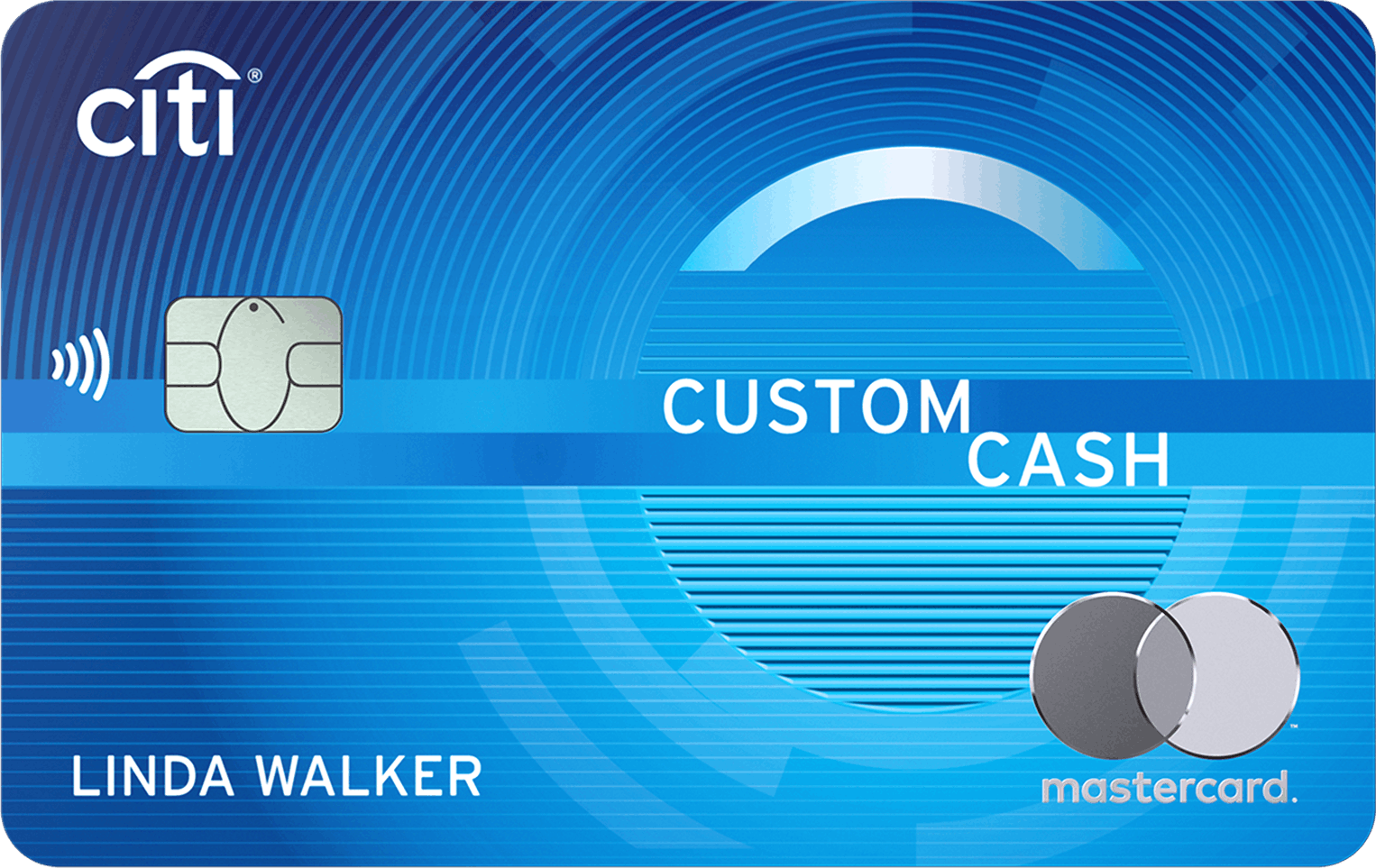
Citi Custom Cash® Card: 0% intro APR for 15 months

From our partner

Citi Custom Cash® Card

2.4 out of 5

290 reviews

Here’s why: In addition to a solid 0% intro APR period, this cash back card offers flexible rewards.

  • Intro rate: 0% intro APR on purchases and balance transfers completed within four months of account opening
  • Intro rate length: 15 months from account opening
  • Ongoing APR: 17.99% to 27.99% on both purchases and balance transfers
  • Balance transfer fee: 5% (minimum $5)

The card also offers 5% cash back on your top eligible spending category each billing cycle on up to $500 spent (then 1%) and 1% back on all other purchases. Your rewards category automatically applies to your spending, so you don’t have to track and activate any offers to take advantage.

BankAmericard® credit card: 0% intro APR for 21 billing cycles

From our partner

BankAmericard® credit card

See details, rates & fees

Here’s why: This card offers a long 0% intro APR period, plus a relatively low balance transfer fee.

  • Intro rate: 0% APR on purchases and on balance transfers made in the first 60 days after your card opens
  • Intro rate length: 21 billing cycles from account opening
  • Ongoing APR: 14.99% - 25.99% variable APR for both purchases and balance transfers
  • Balance transfer fee: 5% of the amount of each transaction

Chase Slate Edge®: 0% intro APR for 18 months

Here’s why: This card offers a lengthy 0% intro APR period and incentives when you make consistent on-time payments. 

  • Intro rate: 0% APR on purchases and balance transfers 
  • Intro rate length: 18 months from account opening
  • Ongoing APR: 18.74% – 28.74% variable APR for both purchases and balance transfers
  • Balance transfer fee: Either $5 or 3% of each transfer, whichever is greater, in the first 60 days, then 5% (minimum $5)

After the intro APR period is over, Chase will review your account for an APR reduction of up to 2% when you pay on time and spend at least $1,000 on your card by your next account anniversary.


About the author: Brad Hanson is a senior editor at Intuit Credit Karma specializing in tax. He joined Credit Karma in 2017. Brad has more than 30 years of experience in print and digital media, having served as a copy chief/multiplatf… Read more.
]]>
Brad Hanson <![CDATA[What is buy-now, pay-later, and how does it affect credit?]]> https://www.creditkarma.com/?p=7704930 2025-11-05T23:10:32Z 2025-10-15T22:12:12Z Over the shoulder view of woman doing online shopping on smartphone.

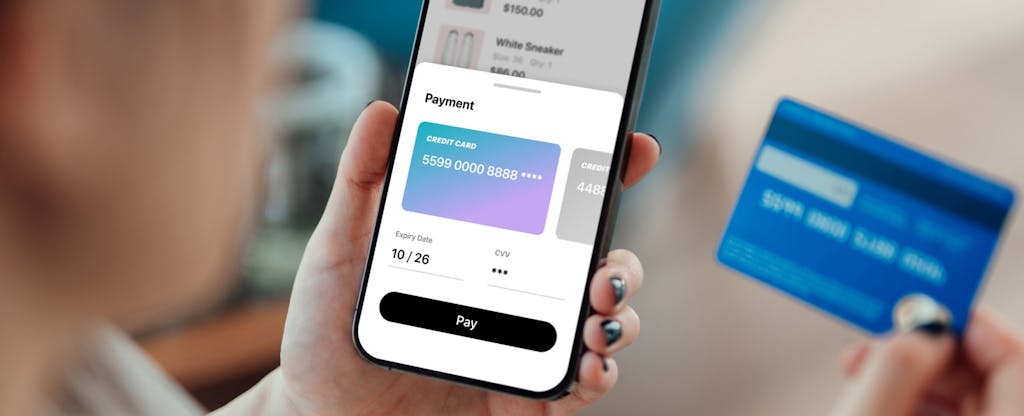
Buy-now, pay-later, or BNPL, loans are a type of short-term financing that allows you to split a purchase into equal, often interest-free, installments paid over a few weeks or months. 

Applying for a BNPL loan usually involves a soft credit check, meaning it won’t hurt your credit scores. But once the loan is approved and active, it may affect your credit. Read on to learn how these loans could affect your credit history and scores.

Does buy-now, pay-later affect your credit scores?

BNPL loans may soon affect your credit scores. Existing versions of the most widely used credit scoring models — FICO and VantageScore — aren’t using BNPL data in their score calculations yet, but the FICO® Score 10 BNPL and FICO® Score 10 T BNPL, launching in fall 2025, will factor in this information. 

Is buy-now, pay-later bad for your credit?

A buy-now, pay-later loan can hurt your credit if the BNPL provider reports your loan and activity to one of the three major credit bureaus — Equifax, TransUnion and Experian — and you make a late payment or miss one altogether. That negative history can appear on your credit report. Additionally, if you don’t repay your BNPL loan and it’s turned over to a debt collector, that collection could be reported to a credit bureau and hurt your credit scores. 

Some companies, such as Affirm, report BNPL activity to at least one credit bureau, while others, such as Klarna and Afterpay, don’t. 

If your BNPL provider does report to a credit bureau, here’s how the information is used:

  • TransUnion notes on its website that any BNPL information provided to the credit bureau is visible to you but can’t be used by credit scoring companies or lenders and won’t affect credit decisions or your scores. It states, however, that this information may factor into your credit score provided by TransUnion in the future.

    Beginning in January 2026, all Credit Karma members with any BNPL account reported to TransUnion will see that account reflected on their TransUnion credit reports as “point-of-sale installment loan.” That information doesn’t currently affect members’ credit scores.

  • Equifax credit reports include any BNPL information reported by providers. This information doesn’t affect your credit scores, but can be seen by lenders who request an Equifax credit report containing BNPL account information when deciding whether to approve you for a loan or credit.
  • Experian also includes any reported BNPL data in your credit report. This information isn’t currently factored into existing credit scores, but is visible to lenders who request an Experian credit report and could affect whether they approve you for a loan or credit. 

How does buy-now, pay-later work?

BNPL is a type of short-term financing that allows you to make a purchase and pay for it later in installments. It’s a common option offered by online retailers, but you can also find it at some brick-and-mortar stores.

The standard BNPL plan operates as four equal payments over six weeks. You typically make the first payment at checkout, followed by a payment every two weeks.

Short-term BNPL loans often charge no interest because the provider earns money by charging merchants a transaction fee. But if you opt for longer-term options (ranging from three to 48 months) for bigger purchases, those typically charge interest — at an annual percentage rate, or APR, that’s typically higher than the average credit card APR.

What are the pros and cons of buy-now, pay-later loans?

If you need to make a purchase that just can’t wait, consider the advantages and drawbacks of a buy-now, pay-later loan.

Benefits of buy-now, pay-later loans

  • Convenience. You’ll find out at checkout if you’re approved for a BNPL loan to make a purchase — no need to wait for a lending decision.
  • Interest-free periods. With many short-term BNPL loans, like those offered by Klarna and Affirm, you won’t pay interest on your purchase.
  • Soft credit check. The hard credit checks that some lenders do when you apply for a loan can ding your credit scores. But buy-now, pay-later providers typically use a soft credit check that won’t affect your credit scores.

Drawbacks of buy-now, pay-later loans

  • Short repayment timeline. If you want to avoid paying interest, you typically need to pay for the entire purchase within six weeks, which might be tough for large purchases. 
  • High interest rates for longer-term financing. Some providers, like Affirm and Klarna offer longer repayment terms — but it’ll cost you. These payment options charge interest, and rates for longer-term financing can be higher than the average APR for credit cards or personal loans. 
  • Fees. If you make a late payment or it gets returned, you could be charged a hefty fee. 
  • Might hurt your credit. Some providers report late or missed payments to the credit bureaus, which may appear in your credit report. 

Next steps

With BNPL accounts increasingly showing up on credit reports, it’ll be easier to track how your BNPL loan fits into your overall credit profile. 

If you have one or more BNPL loans, you can check your TransUnion report for free on Credit Karma to see if the account(s) appears as a “point-of-sale installment loan.” 

If you’re thinking about getting your first BNPL loan (or another one), consider comparing the loan terms and potential credit impact to that of a credit card or small personal loan. This can help you choose the best option for your financial situation and credit-building goals.


About the author: Brad Hanson is a senior editor at Intuit Credit Karma specializing in tax. He joined Credit Karma in 2017. Brad has more than 30 years of experience in print and digital media, having served as a copy chief/multiplatf… Read more.
]]>